In stark contrast to the materials I used in the Vermont Mini-Cabin, much of the structure of the Park City Modern house is engineered lumber. The entire floor system is framed from “I-Joists,” or “TJIs” as they are called informally. (The I-Joist was pioneered by the brand TrusJoist Inc., thus the acronym TJI, I think.) The brand is now called iLevel, and is a division of Weyerhauser. Other companies make similar product. The main floor system with the TJIs in place is shown in this photo.
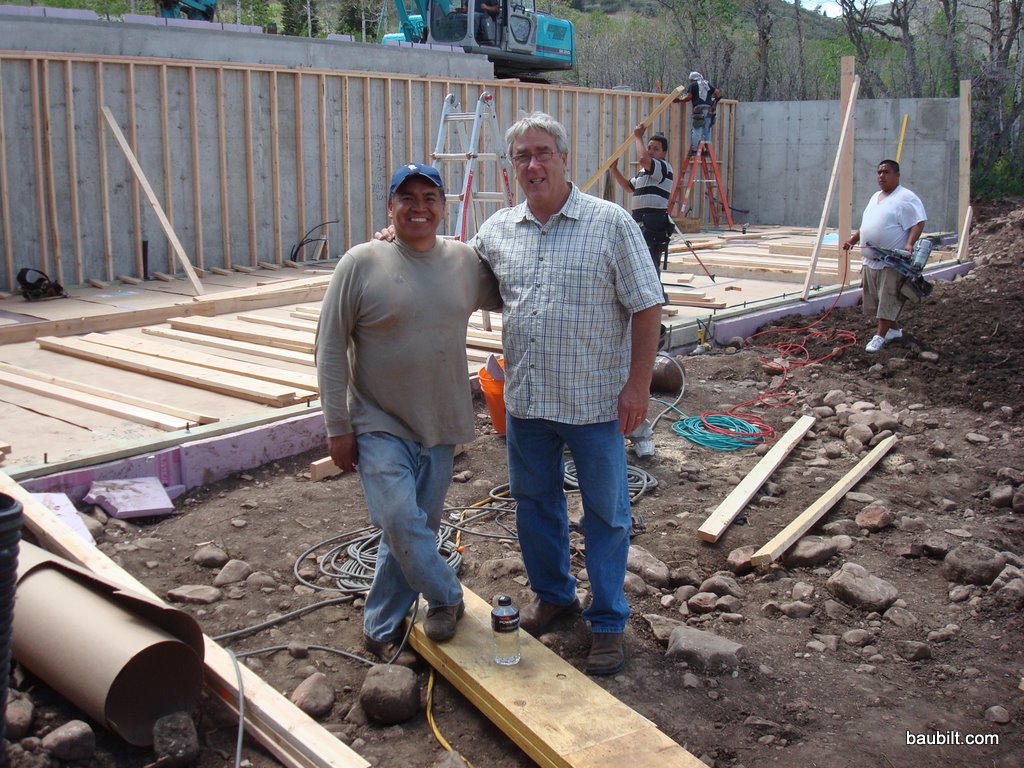
I met on site this weekend with my father-in-law Joe and our builder Jim. We staked out the pavilion so Jim can get started. Our basic approach was to site the structure so that the deck has perfect views of the lake and the Mission Mountains. That happens to give us a southeast exposure, which is perfect. We’ll have warm sun in the morning, and hopefully a bit of shade in the late afternoon, when it can get really hot.
Framing is a blast, because framers are fast and progress is obvious. My framer is Jose Magana (Magana Construction), who has framed a couple of houses for my “general coordinator” Steve Kotsenburg (more on that arrangement in another post).
Jose is a hands-on guy and works alongside his crew, which is one of the reasons I chose him. I like being able to deal directly with the person doing the work. The first day, they got the walls laid out and quite a bit of the perimeter put up. Framing will get fussy and slow when they have to put the steel columns and beams in upstairs next week, and when they get to the roof system, which is really tricky. But, for now, the structure is going up fast and furious.
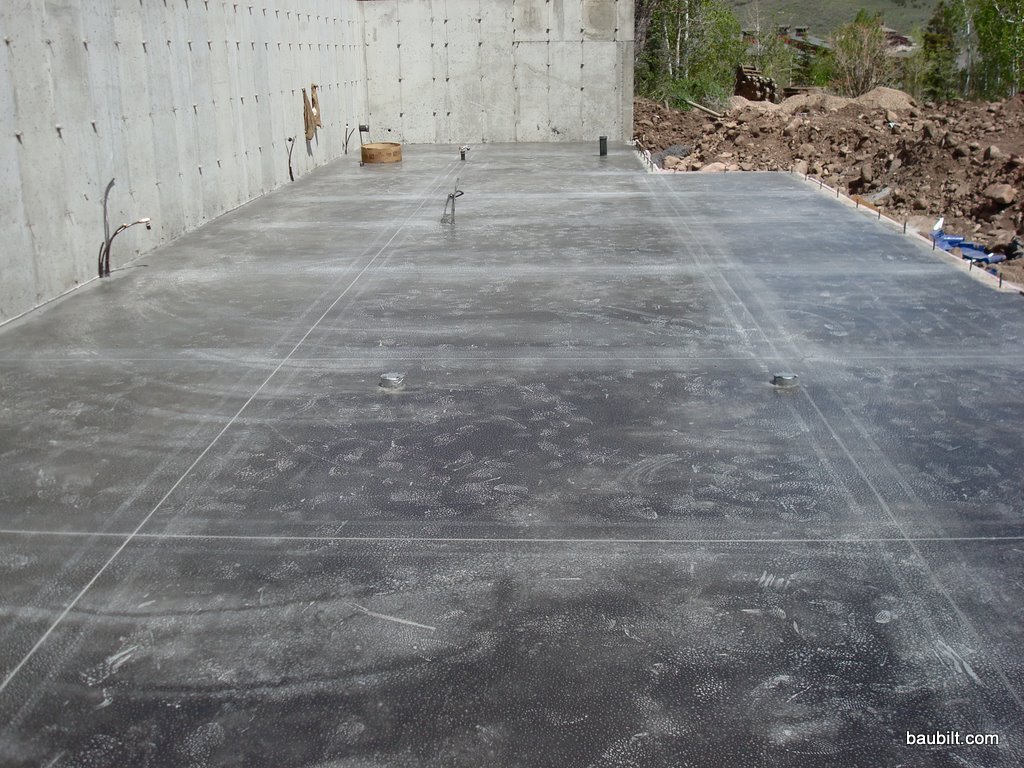
The flatwork guy (Gough Concrete) poured the lower-level slab on Thursday and saw-cut the control joints on Friday. I stopped by on Saturday to take a look. We used a 2% mix of Solomon liquid color, which they call “smoke.” It’s just right. The tint is significantly darker than natural concrete, but still comes across as gray, not black. This color in this concentration costs $39 per cubic yard of concrete. Given that the mud itself only costs $110 per yard, that’s pretty significant. However, given that for this I get a finished floor, I consider the tinted concrete a bargain. This floor cost $5.40 per square foot for everything (#4 rebar, pump truck, concrete, tinting, placing the concrete, finishing the concrete, coating with an acrylic sealer, and saw cuts). This did not include the 15 mil vapor barrier and the under-slab insulation, which my plumbing and heating guy did.
The slab ended up being 6 inches thick instead of 5 inches (meaning the gravel was a bit low), which cost an extra $270 for another 2.5 yards of concrete. The control joints are basically on the same grid as the rooms, stairwell, and passageways, although I split the larger rooms in half so that the joints are not more than about 10 feet apart. (Control joints are created by sawing a 3/4 inch deep groove in the concrete. This gives some visual definition to the space and encourages the concrete to crack on the lines instead of diagonally across the room. (That sort of works…but avoiding cracks altogether is a fool’s errand.)


 Baubilt