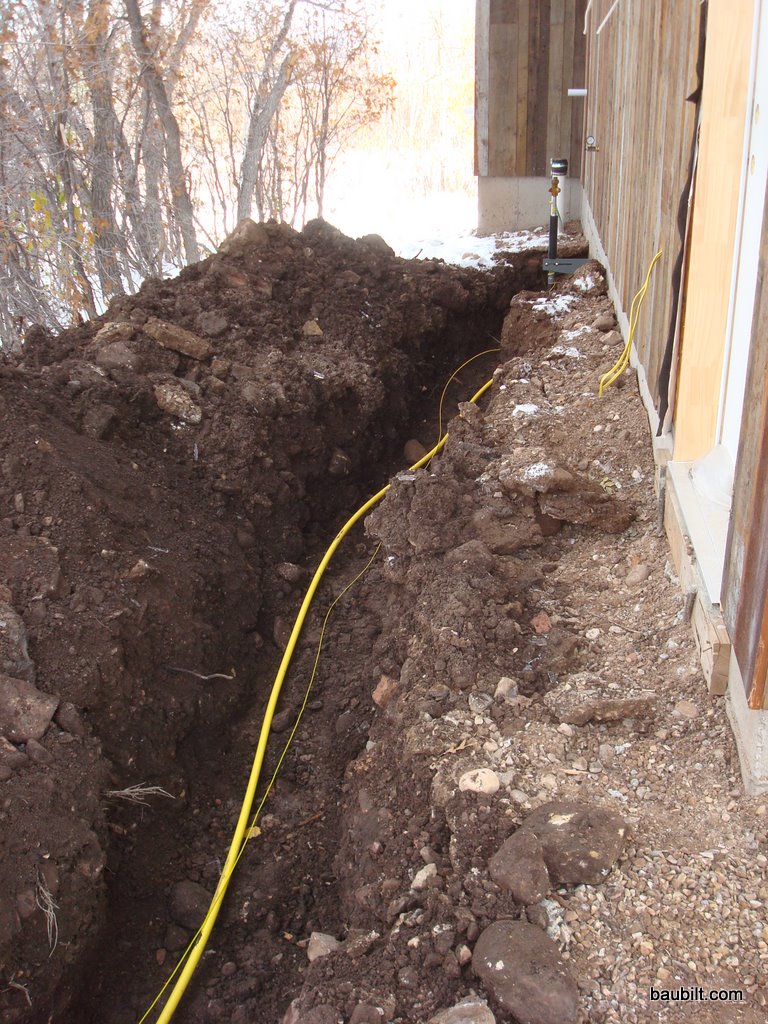
Minor detail: the gas supply. This requires a contractor to the gas company installing a line (shown below). Then the gas company installs a meter (in my case by a friendly guy smoking a cigar…really, a smoking gas line guy…wonder how long he’s been doing it?). They made a mess…so I ended up working with a spade and bucket to fix the driveway before the concrete guy comes.
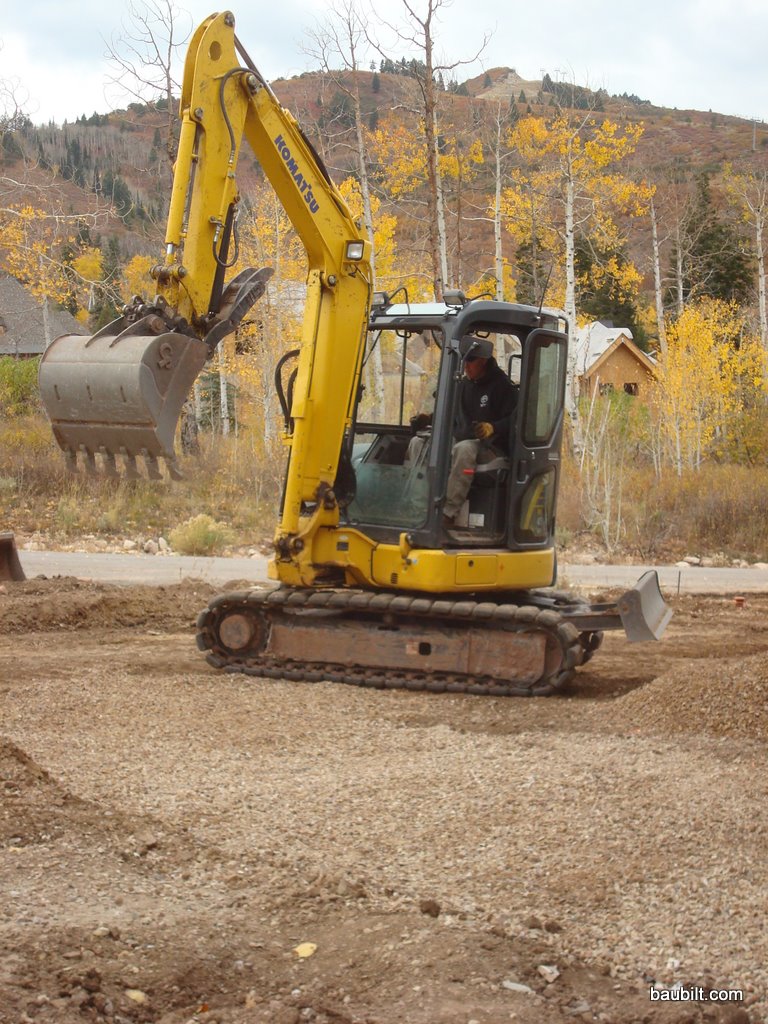
Tyler and Danny (Waters Excavating) came back to clean up the front yard and prep for the concrete driveway to be placed. They are can-do guys and pretty much just figured it out and got it done in one long day. They were the first ones on the site back in April and now one of the last on the site in October. Tyler has a bunch of big track hoes, but does a lot of his work with this small Komatsu hoe. It’s really nice and comes equipped with a rubber track so it doesn’t ruin the asphalt as they run around. I’d love to have one of these, but at $55,000 a pop, this is probably one tool I won’t own.
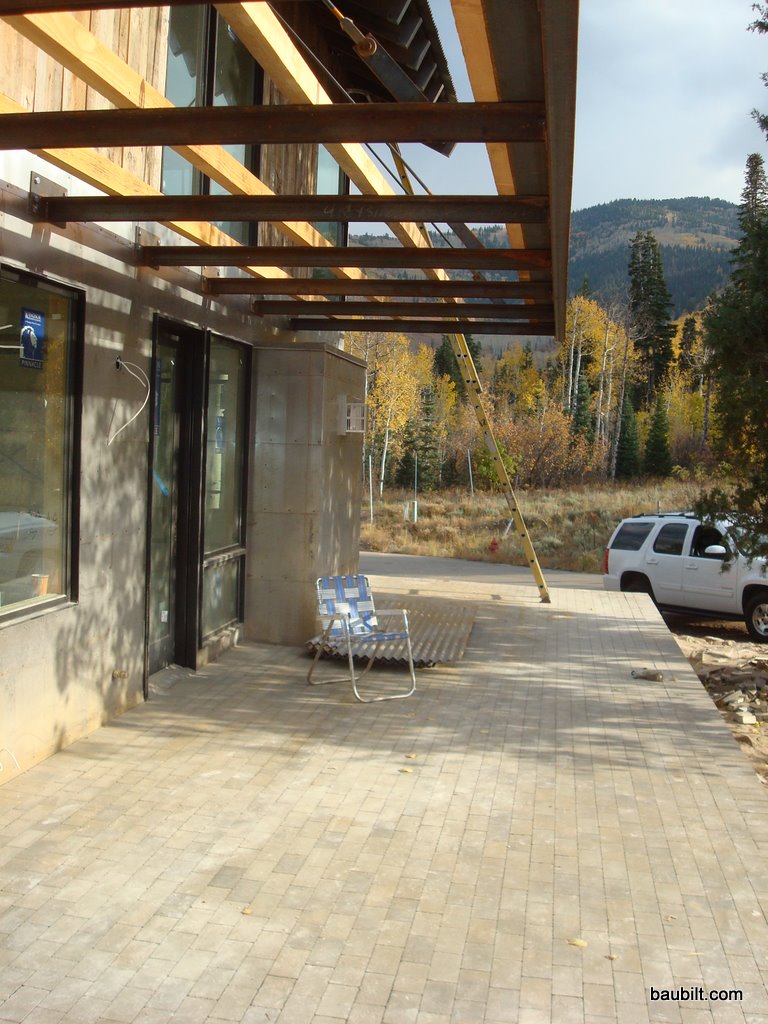
I put in a simple paver surface on the front terrace. I’m really happy with it. The surface is formed from 4″x8″x2-3/8″ Belgard pavers. They are installed upside down, so that the beveled edges intended to be visible on the top are actually hidden on the lower side. That way, I get a nice crisp “brick” look. My contractor was Appian Paver Systems (owner Doug Anthony). He bought 840 sq-ft of material (an even number of pallets) and then just installed it all…allowing the rear terrace to be whatever size it ended up being. That way we got the most area possible for a given cost. These pavers run about $12-14/sq-ft installed, which is more than plain concrete, but about the same as stamped concrete. I much prefer the look to the various concrete alternatives. I also much prefer this surface to that of a wooden deck.
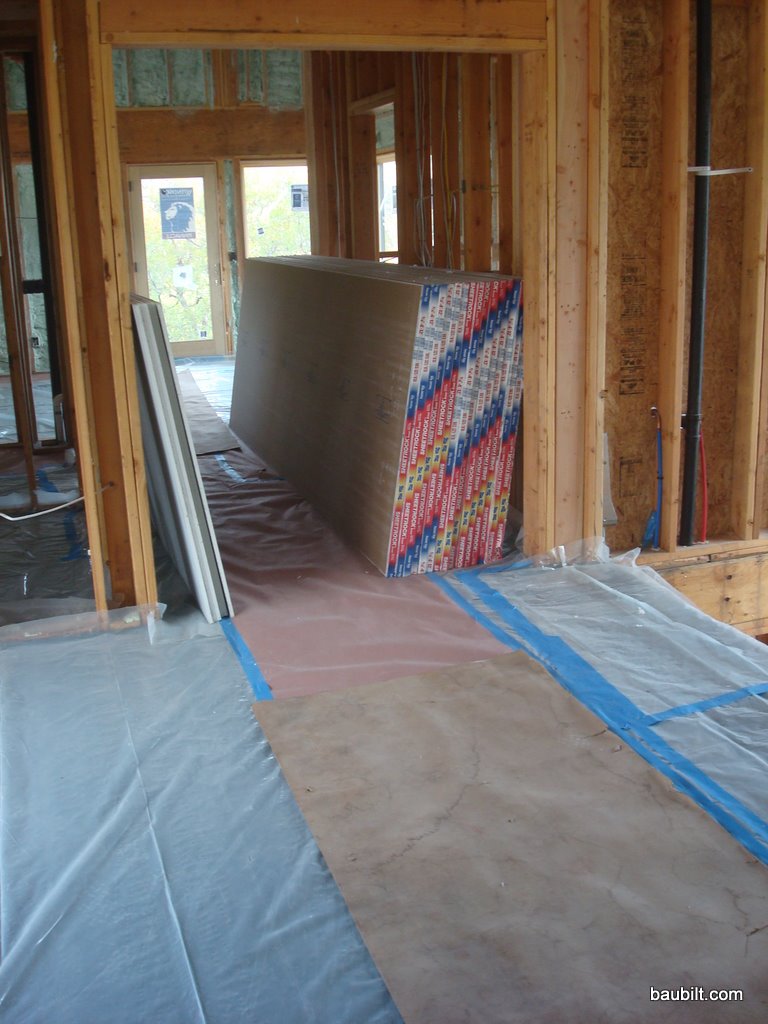
Drywall is a pretty amazing trade. It goes like this: (a) a truck with a big boom on it lifts 40,000 lbs. of limestone into the house (sandwiched between two layers of paper in the form of drywall) , (b) 8 guys descend on the project and in two days “hang” the sheets, (c) a different load of guys show up and tape the seams and finish the surface to deliver nice smooth walls. This all happens for shockingly little money; the whole process costs less than $1/sq-ft of surface including materials and labor.
On this project we specified smooth “level 5” surfaces everywhere. No texture on anything. Nice crisp corners too. None of that fake stucco and texture that seems to be everywhere in the West.
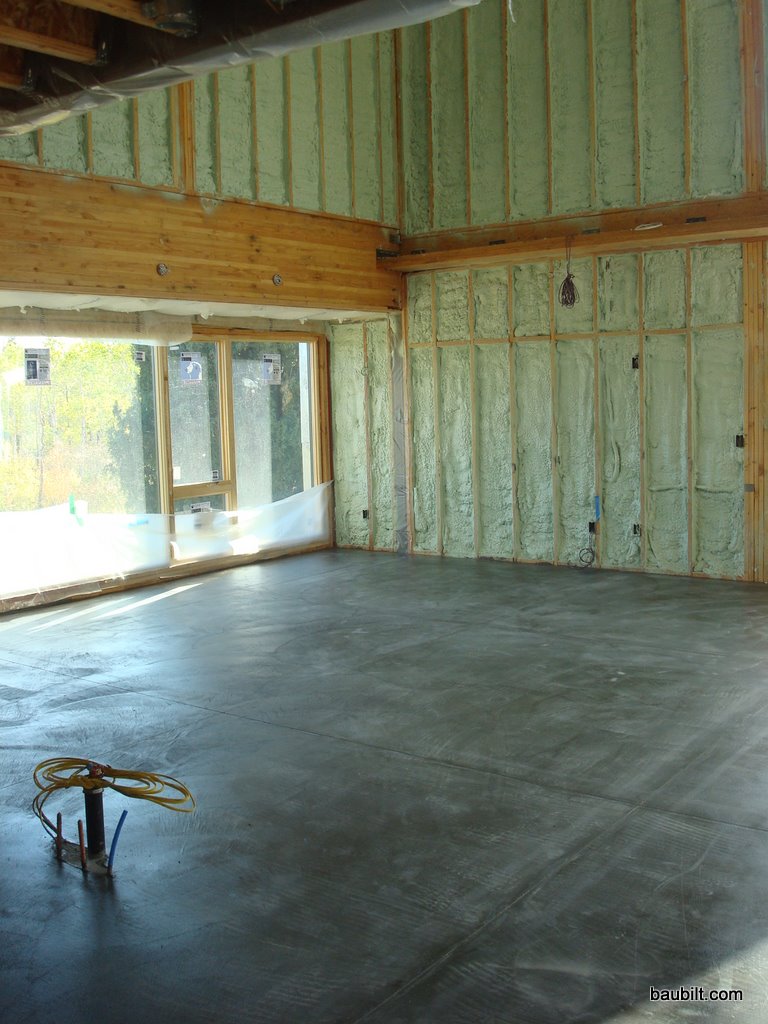
DuWayne (Gough Concrete Specialities) poured the upper-level concrete floors last week. We specified a 3 inch slab of tinted concrete (the same 2% tint we used on the lower-level slab). A 24-inch grid of #2 re-bar is laid over the hydronic heating tubes before the floors are poured. I had them saw cut control joints in nice locations as I had on the lower level. Looks very nice, even if the floors still need some work with a Swiffer.
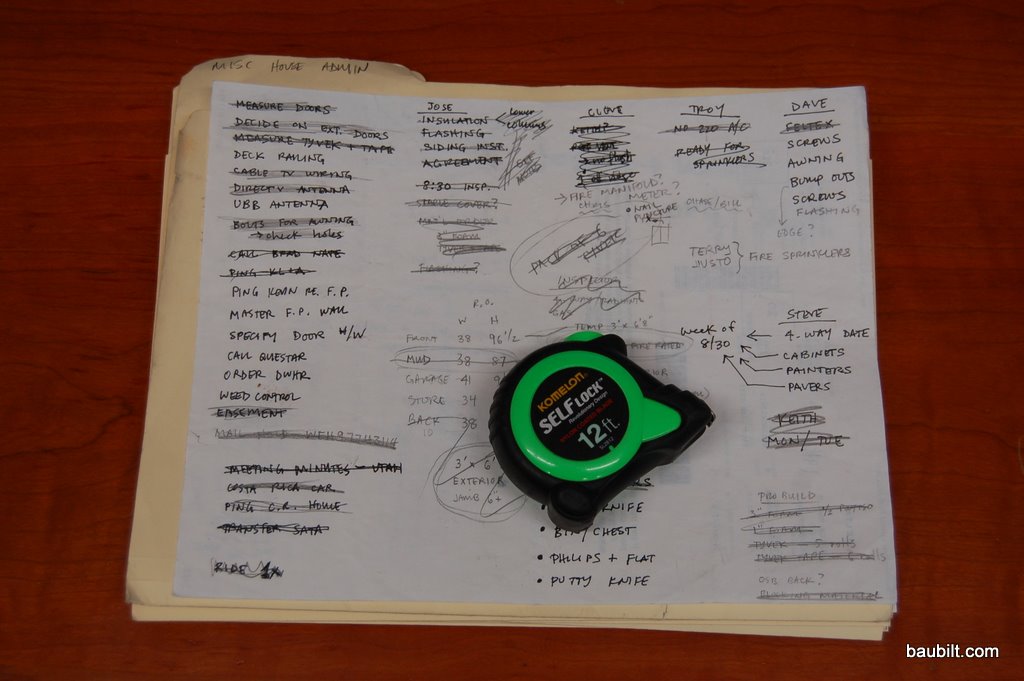
I set up a fairly unusual arrangement for the Park City Modern project. Recall that this is a second home for me, and the distance between home and the job site is 2400 miles, about 7 hours door-to-door via Delta and a rental car. Thus, being on site every day was not feasible.
I visited a construction site with the architects last summer and talked to a contractor they had worked with before. This was a monstrous house , which had been under construction for over 2-1/2 years. It was 15,000 square feet and had a budget of $600/sq-ft. (That’s $9mm in construction cost for those who have a hard time with decimal places.) The GC boasted that the owner had only been on site twice. (Whoa.) I knew precisely then that this guy was not for me. His truck was too nice and his homeowner kiss-up skills were too polished. Those guys serve a very important need…getting a great house built for very rich and very clueless owners.
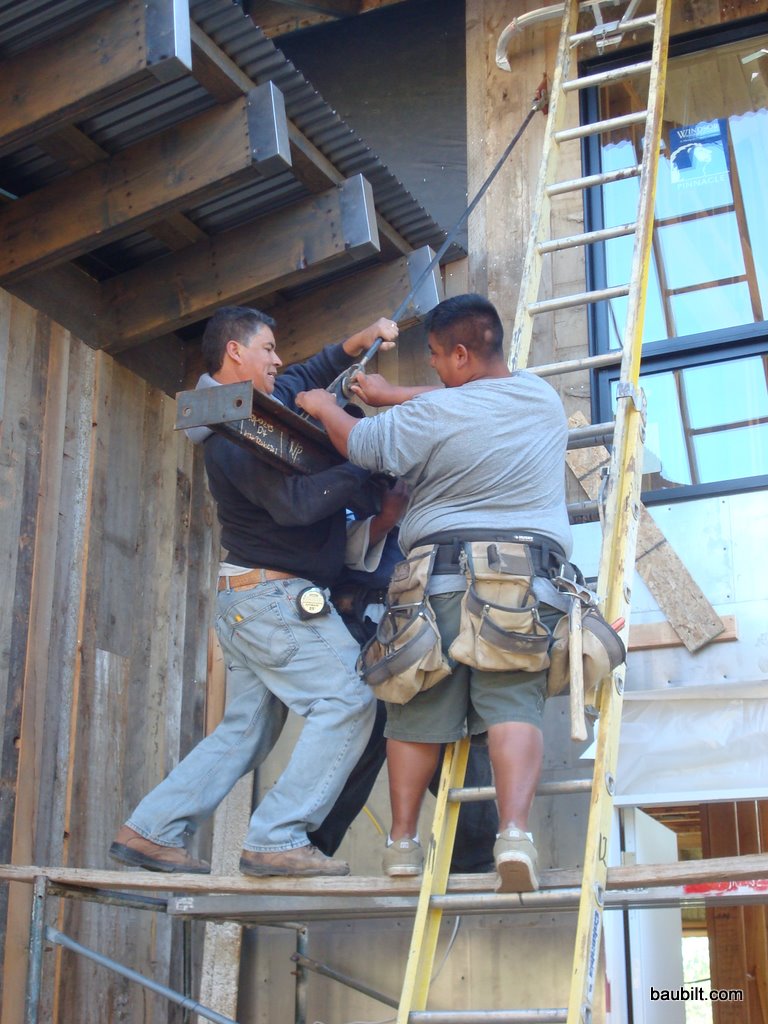
The house will have an 8-foot-deep nearly flat roof over the terrace. It’s kind of like a store-front awning. The architects designed it to be supported by four tie rods, which gives it a cool look, and avoids using any columns to support the edge of the roof. Of course the problem is that this structure has to be designed to handle all the snow from the roof above landing on it in an avalanche. So, it’s incredibly beefy and ties into big steel columns in the walls. This feature of the house probably cost about $10,000 more than a conventional “porch roof.” Still, I can’t imagine a better use of $10,000 in giving the house a distinctive quality.
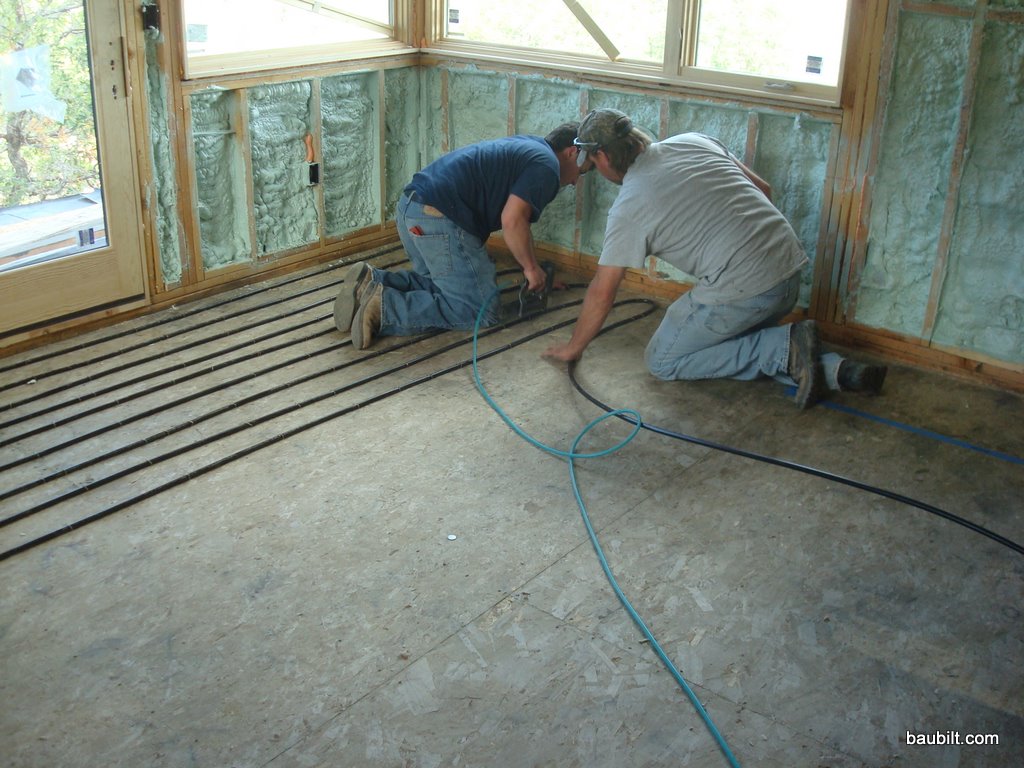
Yesterday, Chris and Justin from CRS Mechanical started stapling down the 1/2″ diameter PEX tubing that is a key element of the hydronic heating system. The tubing will be embedded in 3″ of concrete, which in my case will form the finished floor. The tubing is stapled down first; then #2 rebar is laid over it; then the concrete is poured. The staple-down phase goes pretty quickly with the right tools (a spindle for uncoiling the tubing so it doesn’t twist, and a pneumatic stapler that has a special nose that centers the staple over the tube.
This kind of heating system is often called “radiant heat.” My college heat transfer professor would roll over in his grave to hear that description. This would better be called “convective heat.” The warm water/glycol solution heats the concrete via forced convection (pumping warm fluid from the boiler) and then the concrete heats the air via natural convection. Very little of the heat transfer is via radiation. Radiation is the transfer of heat via infrared waves, as in what you feel if you put your hand under a heat lamp, or for that matter, the way you are warmed by the sun. The transfer of heat via radiation is minimal at the temperature of the floor in a typical hydronic heating system.
I’m using mostly closed-cell urethane spray foam in this house. The insulators have been on site for a few days. The crew is doing an excellent job and I’m convinced this will be a very tight house.
The roofers have nearly completed the steel siding on the house. I’m very happy with the results. We are using 2′ x 3′ 20 gauge cold-rolled steel flat panels. It is very inexpensive (~$2/sq-ft materials and labor), and I think it looks fantastic. It will rust to a reddish brown when exposed the weather for a few months.


 Baubilt