Author Archives: Karl T. Ulrich

Unknown's avatar

About Karl T. Ulrich

CIBC Endowed Professor - The Wharton School. I teach, research, and practice innovation, entrepreneurship, and design.

Resetting Bosch Vision 300 Series Washer

I could not find this information on the web anywhere, so I’m posting it here in case it is useful to someone. (Disclaimer: This worked for me and many others — some slight variants are posted in comments, which you might try if it doesn’t work for you. No promises, of course.)

My 13-month old Bosch Vision 300 Series Washer displayed error code E:27 (E27). Of course, I was just out of warranty.

This error code is not in the user manual, but some research on line indicates that it is a door latch fault. The problem is that the washer will not operate and the door is latched closed.

You can manually release the latch by removing the lower panel (Torx fasteners, I think) and finding a wire lanyard that releases the latch. However, I had read that there was a diagnostic code that could be used to reset the latch solenoid via the control panel.

There is no service manual available on line, as far as I can tell.

Here is what worked…

1. Set the knob to off.

2. Hold down both the Spin Selector button and the Allergy Rinse button simultaneously.

3. While holding these two buttons down, rotate the knob one click to the left, to the “cold” position.

4. At that point, the display will show a diagnostic code and the unit will enter a self-test mode. In my case, the solenoid latch started clicking repeatedly. I pressed the Spin Selector button once or twice, which resulted in the display of new codes and then the release of the latch.

5. I set the knob back to off, and the washer now appears to be operating.

6. You’re done.

Under-Vanity LED Lighting (courtesy of IKEA)

I used wall-mounted vanities in the Park City house because I like preserving as much floor area as possible, and because I envisioned using some kind of under-vanity lighting as a “night light” for the bathrooms. I had the electrician wire in switched outlets for each vanity. It took me a year to get around to the the lighting. Here’s what I figured out.

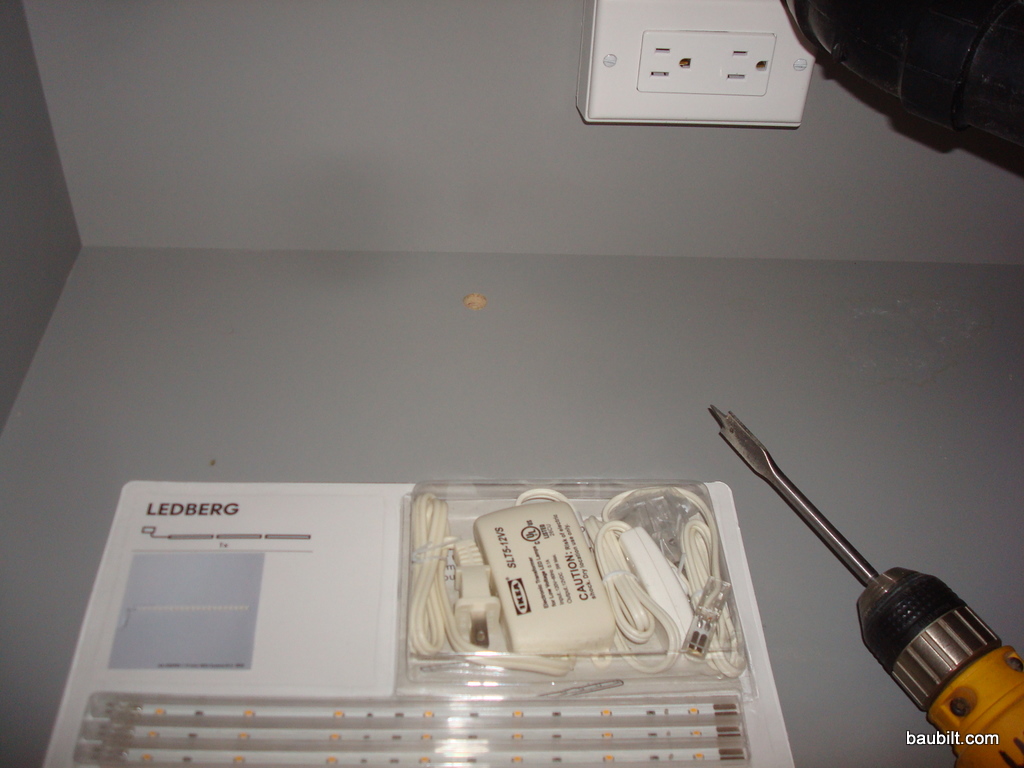
IKEA sells LED lighting strips with power supplies (“Ledberg”). These are roughly 24 inches long and they have a modular connector system so several can be ganged together. I simply mounted these to the bottom of the vanity about 3 inches back from the front edge with the cord fed through a hole in the bottom of the vanity.

This was easy and inexpensive. The light color is a little cooler than I’d like, but overall I’m pretty happy with the results.

Continue reading

Amenity Hut

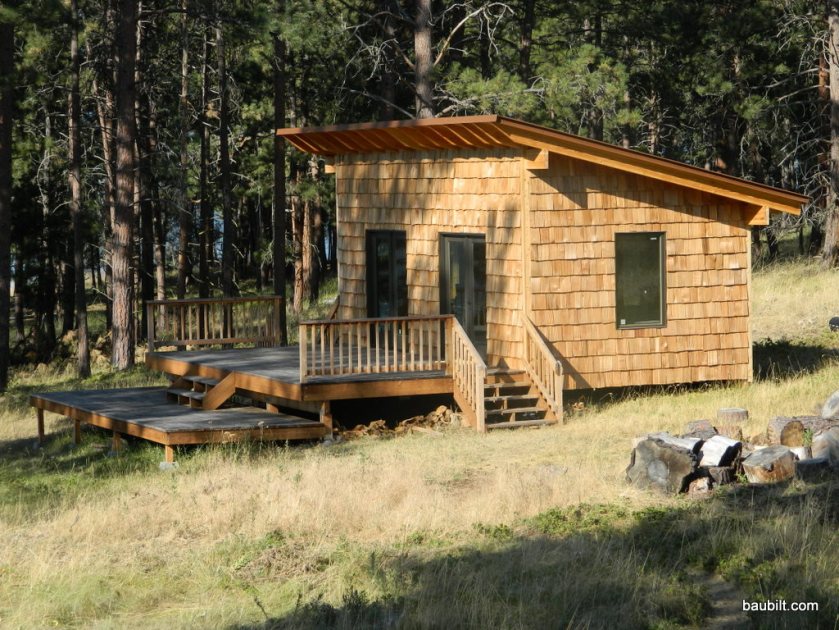
The Amenity Hut is really nice. It’s a 6′ x 12′ little structure with an enclosure for our composting toilet and for a shower. We mounted a sink on the outside wall. We have running water from the lake provided by a solar-powered pump and pressure tank.

It’s so nice to have a place to wash hands and brush teeth right next to the Pavilion. We placed a Katadyn gravity-fed water filter next to the sink to provide drinking water there, as the lake water can present giardia risks.

Continue reading

Composting Toilets for Highly Seasonal Use

Warning: if you are not an extreme tree hugger and/or really don’t need a toilet without a septic system, you should skip this post.

I’ve spent a fair bit of time over the last two years researching composting toilet systems. I’ve discussed them with friends and have done some experiments at my cabin in Vermont. I’ve also had almost 10 years of experience with a commercial system (Envirolet) at my Vermont cabin.

Commercial composting systems are really set up for steady demand by a few people. Our use pattern is very different. We hit the system very hard for about four weeks a year and then it sits idle for the other 48 weeks.

Furthermore, most commercially available composting systems benefit substantially from electric heaters built into them. These use a fair bit of energy. My system in Vermont is not powered and it does not work very well, by which I mean the waste takes at least a year to decompose. I’ve concluded that we wouldn’t be happy with the performance of a conventional composting system at the Montana sleeping pavilion.

Instead, I’ve installed a “Lovable Loo” which I’m using in an unusual way…anaerobic composting instead of aerobic composting.

The Lovable Loo is basically a housing for a 5-gallon plastic bucket with a toilet seat on it. After each use, the user scoops a generous amount of saw dust or peat moss over the waste in the bucket. (We use peat moss because it’s easy to buy at the home center.) This essentially eliminates odors and provides a more attractive appearance than the alternative. When the bucket is full, the lid to the box is lifted, and the bucket lifted out and replaced with a new one. There are thousands of these systems in use and they are apparently used very successfully even in conditioned indoor spaces.

Nearly all Lovable Loo users adopt an aerobic composting system. Basically they have a wire/wood bin on their lot somewhere and they empty the bins of waste into the bin to compost. If the mix of organic material, water, and air is maintained appropriately, these compost piles are efficient and fast at decomposing the waste. Aerobic composting does not smell, as the product of decomposition is largely C02, an odorless gas. The temperatures of composting are high enough that dangerous microbes are killed. However, this would not work on our site. First, I’m not wild about disturbing the landscape with a sizable composting bin. Second, I am also worried about maintaining the right conditions for composting when unattended.

Continue reading

Flush terrace gutter

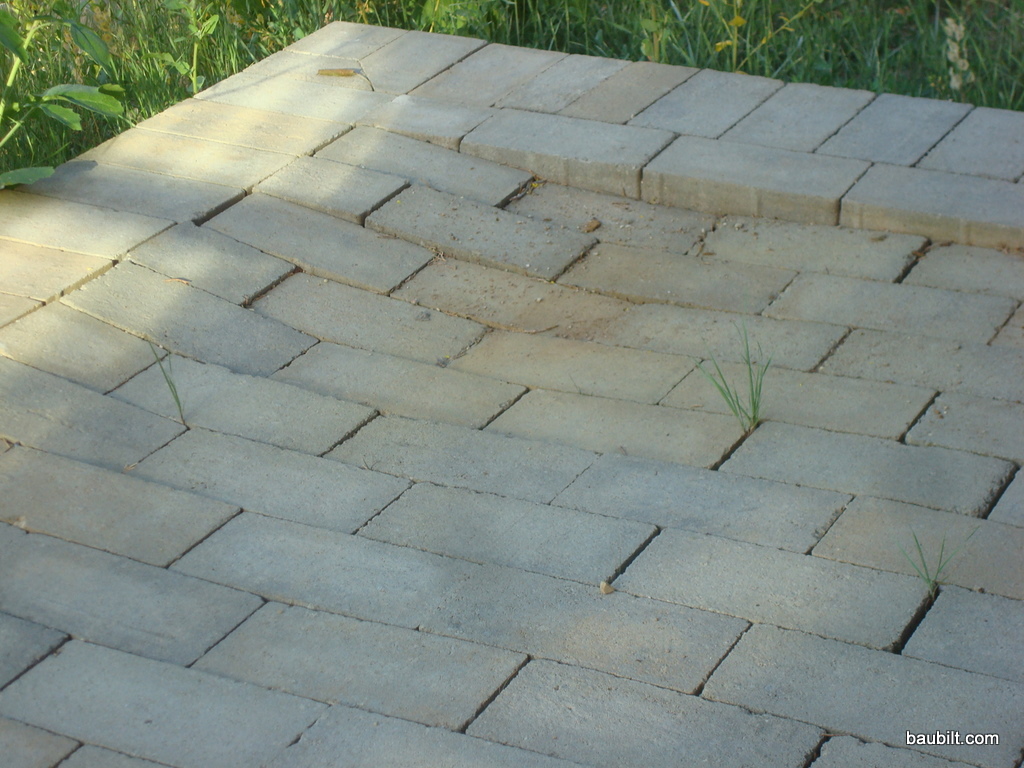
Just one defect emerged in the Park City house over the winter. About half of the main roof drains onto the front awning and then onto the paver terrace. A lot of water hits that terrace, and much of it drains down through the terrace instead of running off the front edge. As a result, the pavers settled a lot over the winter. One of the architects had suggested the possibility of inserting a 12″ c-channel into the paver surface to serve as a gutter from the point where the water hits the terrace to the edge. I wasn’t wild about introducing a 2-3″ groove in the terrace, as I thought it would be a trip hazard. Instead I designed a nifty welded gutter assembly with a slightly sloped top surface which feeds a 3″ c-channel beneath it to drain off the terrace. Hard to explain, but hopefully the pictures are clear.

Continue reading

Accelerating Oxidation of Steel Siding Panels

The cold-rolled steel roof has oxidized nicely over the fall and winter. It looks pretty good. Most of the steel siding is starting to turn as well, but it is pretty well protected from water, and with temperatures mostly below 50F, the oxidation rate is slow. Still, I’m pretty sure that by the end of the summer, most of the steel siding will have a decent patina on it.

However, the steel panels on the front of the house are very well protected. They basically never get wet. By mid-Spring they were looking pristine. So, I decided I would accelerate the process. Here is the siding in that area before I did anything…

I mixed 1/4 muriatic acid (standard stuff at Home Depot) with 3/4 tap water in a spray bottle. (Be very careful. Muriatic acid is, well, acid. It really does burn your skin and can destroy your eyes, too. Gloves and safety glasses/goggles are essential.) I simply misted the entire wall surface with the spray bottle. In 24 hours, as long as the temperature is above about 50F, the entire surface will be very rusted. You can see where you have missed spots and just hit those again. I’ll be curious to see how the accelerated oxidation compares in color to that of the naturally oxidized surface. You can already see that where water has bounced onto the wall, the surface is more orange. Anyway, I’m pretty happy with the results. I would be curious to know if an even milder acid would work (e.g., white vinegar). I bet it would, especially if the temperatures were a bit higher.

Continue reading